
In-home sales for a contractor comes down to running the estimate visit well: arrive on time, walk the job with the homeowner, ask questions before you measure, make sure everyone who decides is there, give options, and say exactly when the estimate is coming before you leave. Do those six things every time and you will win more of the visits you already have.
Below is each step in order, what to say, and a checklist table you can copy. It is written for remodelers, HVAC, roofing, fence and deck, and landscaping contractors who sell their own work at the kitchen table.
Before you go
A good visit starts the day before.
- Confirm it. Send a reminder the day before and ask them to reply to confirm.
- Read what you know. What they asked for, where the lead came from, and anything they told you on the phone.
- Look the property up. A satellite view shows roof shape, yard size, access and slope before you arrive.
- Load the kit. Tape, laser measure, flashlight, moisture meter or whatever your trade needs, camera, notepad, samples or brochures, and a printed or digital sheet showing past work.
- Know your options. Have two or three price levels in mind for this kind of job, so you can talk ranges if they ask.
Arrive on time and start at the door
Turn up inside the window you gave, or text before it starts if you will be late. Park where you will not block the driveway. At the door, say your name and business name, and confirm what you are there for.
“Hi, I’m [Your name] from [Business name]. We’re looking at the [job] today. I’ll need about [length]. Is now still a good time?”
Small things count here: clean boots or shoe covers, phone in your pocket, and asking before you go into rooms or the backyard. The homeowner is judging what it would be like to have you working at their house for days or weeks.
Walk the job with them before you measure
Ask them to show you the problem in their own words. Walk it together. Let them talk. You will hear what they care about, what went wrong last time, and what they are worried about.
Take photos as you go and say what you are looking at: “This is the flashing around the chimney, that’s often where leaks start.” It shows you know what you are doing without a sales pitch.
Ask before you measure
The questions you ask decide whether your estimate fits. Ask them before you pull out the tape:
- What made you call now?
- What would you like it to look like, or work like, when it is done?
- When are you hoping to have it finished? Is there a date that matters, such as a sale, a baby or summer?
- Have you had other estimates, or work like this done before?
- Do you have a budget in mind, or a figure you would like to stay under?
- Who else is involved in the decision?
- Is there anything we should know about access, pets, HOA rules or permits?
Write the answers down. They go into your estimate and into every follow-up call.
Get everyone who decides in the room
If two people own the house and only one is at the visit, the estimate goes home to someone who never met you and has only a number to look at. When you book, ask: “Will everyone who’s part of the decision be there?” If not, offer another time.
If you arrive and someone is missing, do the visit, then offer a short call or video call with them before you send the estimate. Do not rely on the person at the visit to explain your work for you.
Give options
Before you leave, talk through two or three ways to do the job: a standard version, the one you would recommend, and a better one. Give a rough range if you can stand behind it. Options give the homeowner something to choose between instead of a yes or no on one number, and they show what moves the price.
Do not guess a firm price at the door. Say what the range depends on, such as what you find when the old material comes off or which equipment they choose, and when they will have the written estimate.
Say when the estimate is coming before you leave
This is the step most contractors skip. Before you leave, agree three things and write them down:
- When the estimate will arrive: “You’ll have it by Thursday evening.”
- How it will arrive: email, text link or in person.
- When you will talk it through: “Can I call you Friday at 5 to go through it?”
Then send it when you said you would. A homeowner who was promised Thursday and gets it the next Tuesday has already learned something about how you run a job. For writing it, see how to write an estimate a homeowner can say yes to, or our roofing estimate template.
If they want to sign on the day
Some homeowners are ready at the table. Have your contract ready, and know the rules for sales made at the home. The FTC’s Cooling-Off Rule covers many sales made at the buyer’s home and requires sellers to tell buyers about their right to cancel within three business days. Whether it applies to your job, and what your state adds on top, is something to check with your state’s consumer protection office or a lawyer. This is not legal advice. Our article on door-to-door roofing sales goes into the rule in more detail.
When a homeowner says yes, get it in writing before you order anything. See turning a spoken yes into a signed one.
The in-home estimate checklist
| Stage | Do this | Done |
|---|---|---|
| Day before | Reminder sent, reply received | [ ] |
| Day before | Lead notes and property view checked | [ ] |
| Arrival | On time, or texted before the window | [ ] |
| Door | Name, business, purpose, time needed | [ ] |
| Walk | Homeowner showed the job in their words | [ ] |
| Questions | Why now, result wanted, timing, other estimates, budget | [ ] |
| Decision | Everyone who decides was there, or a call is booked | [ ] |
| Measure | Measurements and photos taken | [ ] |
| Options | Two or three ways to do it discussed | [ ] |
| Leaving | Estimate date, delivery method and follow-up call agreed | [ ] |
| Same day | Notes written up and estimate due date recorded | [ ] |
After the visit
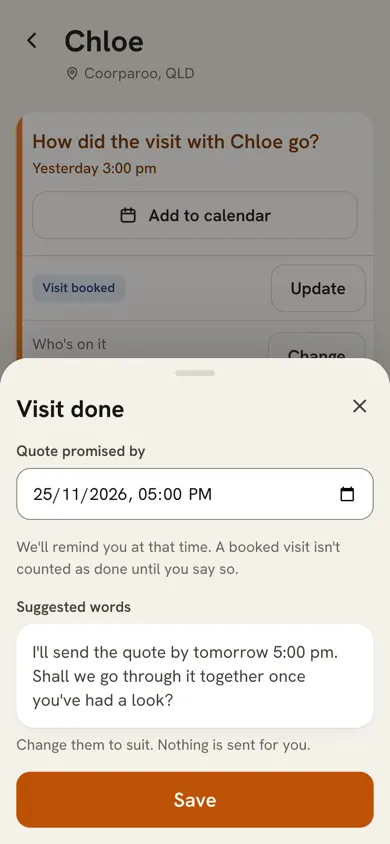
Write your notes up the same day, while you remember what the homeowner said. Record the date you promised the estimate and the follow-up call as next steps on the lead. If PreBuild finds homeowners for you, the PreBuild app asks when the estimate is promised by once the visit is done, and reminds you to send it.
Then follow up on the day you agreed. Most estimates that go quiet do so because nobody called when they said they would.
See how the app works
Common questions
How long should an in-home estimate take?
Long enough to walk the job, ask your questions, measure and talk through options. Tell the homeowner how long you need when you book and again at the door, and keep to it.
Should I give a price at the in-home visit?
Give a rough range only if you can stand behind it, and explain what the range depends on. Send a written estimate by the date you agreed before you left.
What questions should a contractor ask at an estimate appointment?
Why they called now, what result they want, when they want it done, whether they have other estimates, whether they have a budget, who else decides, and anything about access, pets, HOA rules or permits.
What if only one homeowner is at the visit?
Do the visit, then offer a short call with the other decision maker before you send the estimate, so they hear it from you rather than second hand.