
To handle a price objection, ask what is behind it before you answer, offer a different scope if their budget is the issue, and explain what your price includes. Do not cut the price on the spot. A homeowner who says “that’s more than I expected” is usually telling you they are comparing, worried or unsure, and each of those needs a different reply.
Below are the reasons push-back happens, the order to handle it in, what never to do, and wording you can adapt for an HVAC replacement, a roof and a remodel.
Why homeowners push back on price
A price objection sounds like one thing but usually comes from one of these:
- They have a lower number. Another contractor’s estimate, often for a different scope.
- They had a figure in their head. From a neighbor, a website or what the last one cost ten years ago.
- They cannot see what they are paying for. A single total with no breakdown looks expensive.
- They have a budget limit. They want the work but cannot pay for all of it now.
- They are not ready. “It’s too much” is a polite way to end the conversation.
You cannot tell which one you have until you ask. That is why questions come first.
First, ask before you answer
When a homeowner pushes back, stop talking about your price and ask. Keep your tone level. Stay curious and calm.
“That’s fair to ask. Can I check what you’re comparing it to? Is it another estimate, or a figure you had in mind?”
“Is it the total that’s the problem, or one part of it?”
“If the price were where you wanted it, is this the work you’d want done?”
The third question matters most. If the answer is yes, the job is real and the gap is money. If the answer is “we’re still thinking about it”, price was never the main issue, and lowering it will not win the job.
Then offer options instead of a discount
If the gap is budget, change the scope and keep your margin. Offer something smaller that still does the job properly:
- A standard model instead of the top one
- Doing the urgent part now and the rest later
- A different material that meets the same need
- Leaving out work the homeowner could do themselves, such as clearing a room or hauling debris
Each option has a lower price because it has less in it. That keeps your rates intact and makes the next estimate easier to defend. Our article on writing an estimate a homeowner can say yes to covers how to lay options out on the page.
Then say what the price includes
When they are comparing with a lower estimate, ask to go through the two side by side. Often the other number leaves things out. Walk through what yours covers in plain words:
- Permits and inspections, and who arranges them
- Removal and disposal of the old equipment or material
- Your warranty on labor, and the manufacturer’s warranty on parts
- Who is on site, and whether they are your crew or subcontractors
- Insurance and licensing (check your state’s licensing board for what applies to your trade)
- Cleanup, and what the site looks like when you leave
Do not run down the other contractor. Say what you include and let the homeowner ask the other company the same questions.
What never to do
- Drop the price on the spot. It tells the homeowner your first number was padded, and they will wonder what else is.
- Argue. You can be right about the price and still lose the job.
- Criticize the other estimate. Compare scopes instead.
- Fill the silence. After you answer, stop and let them think.
- Promise what you cannot write down. Any change to scope or price goes in the revised estimate.
If you do want to move on price for a genuine reason, such as a flexible start date that fills a gap in your schedule, say the reason out loud and change something in the scope or terms to match it.
Sample wording by trade
HVAC replacement
“I understand. The other estimate, is it for the same size system and efficiency? A lot of the difference usually sits there, and in whether the ductwork and thermostat are included. If budget is the main thing, I can price a standard-efficiency unit and keep the same install and warranty. Would that help?”
Roof replacement
“That’s a fair question. Can we look at both estimates together? I’d check whether they include tearing off the old layers, replacing damaged decking, new flashing and the permit. If those are left out, the price can change once the roof is open. If the total is the issue, we can talk about shingle options that meet your needs.”
Kitchen or bathroom remodel
“Thanks for telling me. Is it the overall number, or one part, like the cabinets or the tile? Fixtures and finishes move the price the most. If you’d like, I can show you the same layout with a different cabinet line and a standard tile, so you can see what it would cost.”
Our HVAC business guide and roofing business guide go further into how to price and present each kind of job.
Head off price objections earlier
The best time to handle price push-back is before the estimate exists.
- On the first call, ask if they have a budget in mind. Many will say no. Some will give you a number that tells you the job will not work.
- At the visit, give a rough range before you leave if you can, so the estimate is not a shock.
- In the estimate, break the total into parts and include an option or two, so the homeowner sees what drives the price.
- When you send it, agree a time to go through it together rather than leaving them alone with a number.
When to walk away
Some jobs will not work at a price you can do properly. If the homeowner’s budget is far below what the work costs and none of the options fit, say so kindly and leave the door open: “I don’t think I can do this well for that budget. If anything changes, I’d be glad to look again.” Then record why you lost it. If you hear the same reason often, it is telling you about your lead sources or your pricing. See how to ask why you lost an estimate.
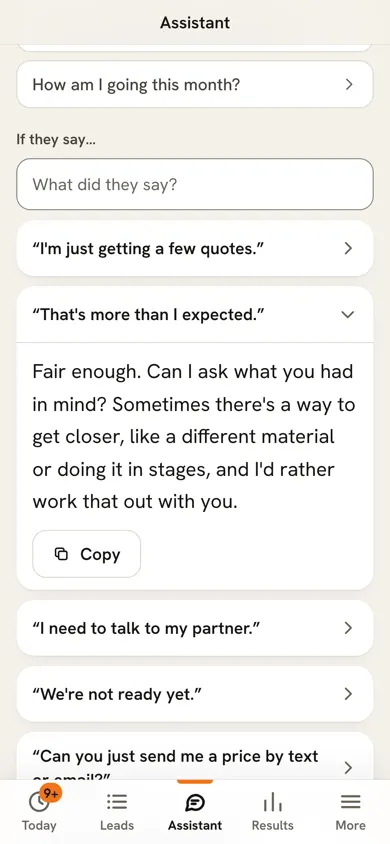
The PreBuild app has an assistant, a paid add-on, that suggests wording for “that’s more than I expected” on the job in front of you. The questions above work without it.
See how the app works
Common questions
What do you say when a customer says your price is too high?
Ask what they are comparing it to and whether it is the total or one part. Then, if budget is the issue, offer a smaller scope, and if they have a lower estimate, compare what each one includes.
Should a contractor ever lower the price?
Not on the spot to save a sale. Lower the price only by changing the scope, or for a genuine reason you can name, such as a flexible start date, and write the change into the revised estimate.
How do I handle “I got a cheaper estimate”?
Ask to see both side by side and compare scope: materials, permits, removal, warranty, who does the work and cleanup. Do not criticize the other contractor.
How can I stop price objections before they happen?
Ask about budget on the first call, give a rough range at the visit, break the estimate into parts with options, and agree a time to go through it together.